Field dispatch

Reading a City by Its Food Stalls

Notes from a week of eating at the same corner, twice a day
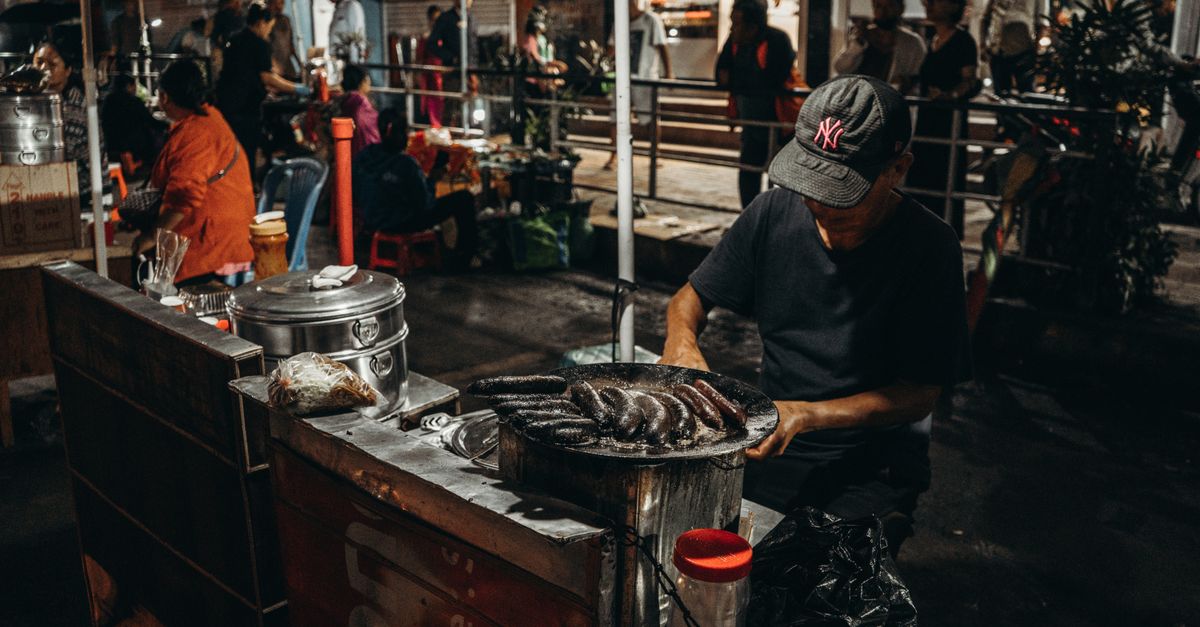
Street food stall with a vendor cooking and customers waiting nearby

Most travel writing about food starts with a list. This piece starts with a corner. For one week I ate at the same stall twice a day, once before the morning rush and once after the offices let out, and wrote down what changed. The point was not to find the best plate in the city. It was to see whether a single counter, watched closely enough, could tell me how a neighborhood actually keeps time.

The morning shift runs on speed. Regulars arrive in twos and threes, order without reading anything, and eat standing. Portions are smaller and cheaper than they look on a menu board, and the vendor knows most names. By mid-morning the queue thins out, the second cook sits down, and the stall goes quiet for a stretch that lasts longer than you would expect. That gap is the most useful thing I learned: it tells you who the stall is really for.

After lunch the rhythm changes again. The counter routine stays the same, but the plates get heavier and the conversation slows. The evening crowd is different in kind, not just in size. People come in from nearby offices, order the same two or three dishes, and leave within twenty minutes. If a stall fills up at that hour with people who already know the menu, it is a local habit. If it fills up with people taking photos of the sign, it is something else, and the food may still be good but the reading is different.

None of this explains a whole city, and I am not going to pretend it does. What it does is give you a way to check your assumptions against something observable: opening hours that shift without notice, portion sizes that track the time of day, and small signals about who can afford to eat where. Walking the same route twice a day for a week also made the distances real. The stall was eleven minutes from where I was staying in the morning and closer to fifteen in the evening, mostly because of traffic at the crossings.

The failures matter as much as the findings. I misread the quiet hour as a closing time and missed a full service. I ordered the wrong dish twice because I assumed the board was in a fixed order. Next time I would ask about the schedule on the first visit instead of guessing from the second. That is the kind of note this magazine is built on, and it is why the reporting stays close to the counter rather than reaching for a conclusion about the neighborhood as a whole.

About this dispatch

Reading a City by Its Food Stalls

This piece comes from a week spent at one corner stall, eating there twice a day and writing down what changed. Not a review of the food, and not a list of places to try. The point was repetition: the same counter, the same cook, the same handful of regulars, watched long enough that the neighborhood's schedule started to show through.

The reporting stays close to what is visible from the counter. Morning rush, the dead stretch after lunch, the evening crowd that arrives when nearby offices let out. Counter details, portion sizes, how long people stand before they order, whether they take the plate away or eat it right there. Small signals, but they add up to something a single visit never shows.

Filed by David On The Go as part of the magazine's street-level reporting, organized by rhythm of trip rather than by country. The same piece runs in the Spanish edition with local notes added.

Reading a City by Its Food Stalls

A week of eating at the same corner twice a day leaves a different kind of record than a single review. The stall opened before the buses filled, thinned out around two, and picked up again when the offices let out. The counter routine stayed steady; portions shifted with whoever was behind the griddle. These frames follow that rhythm rather than a list of places to try.

Street food stall with a vendor cooking and customers waiting nearby
The morning setup: a griddle, a stack of plates, and the first customers arriving before the sidewalk gets busy.
Street food stall with a vendor cooking and customers waiting nearby
Midday lull: the same counter, fewer orders, and a chance to watch how the line resets.
Street food stall with a vendor cooking and customers waiting nearby
Evening rush: office workers, regulars, and the short window when the line never quite empties.

What repeats is the useful part. The same faces at the same hour, the same short exchange at the counter, the same handful of dishes that never leave the board. Reading a neighborhood this way takes patience rather than a checklist, and it stays honest about what a visitor can actually see from a plastic stool on the sidewalk.

Clarifications

Reading a City by Its Food Stalls

The week at one corner produced a narrow record, not a survey. Below are the boundaries I kept while reporting, so the piece is read for what it is: a set of observations from a single stall, gathered twice a day, with the limits stated plainly.

One stall, not the neighborhood

Everything here comes from a single counter over seven days. When I describe the morning rush or the lull after lunch, I mean what happened at that stall, not a pattern for the whole district. A second stall two blocks away may keep different hours and a different crowd.

Counter details are what I recorded

The counter details in the piece are the ones I recorded during that week. They are a dated observation, not a permanent reference. Portion sizes and counter details shift with the season, the supplier, and who is standing at the grill that day.

Hours are observed, not published

I noted when the shutters went up and when the last plate left the counter. Those times are what I saw, not an official schedule. If you plan a visit around them, treat them as a rough guide and expect the stall to close early on a slow afternoon.

Local habit versus tourist stop

The signals I use for that distinction are simple and imperfect: who makes a quick purchase, who is greeted by name, who eats standing and leaves in five minutes. They suggest a reading of the corner. They do not prove who belongs there, and I do not present them as proof.

Internal operations and the parts I could not see

I can describe how many people worked the counter at peak hours and how the queue moved. I cannot describe staff arrangements, the stall’s operating terms, or how the supply chain works behind the grill. Where the piece touches on those questions, it says so instead of guessing. The same applies to the failures: a wrong turn, a closed stall on a holiday, a route that took longer than expected. Those are included because they are part of the record, not because they generalize to every visit.

Read the dispatch as one week at one corner. If you want the fuller picture, walk the same block at a different hour and compare notes with what is written here.

Reading a City by Its Food Stalls

The food-stall piece came out of a week of standing at the same counter twice a day, and readers have been writing in with their own corners. If you want to flag a correction, add a detail from a stall you know, or ask how the reporting was done, the desk reads everything that arrives. There is no ticket queue and no account to set up, just a direct line.

Email the desk

Best route for corrections, follow-up questions on the stall notes, or a note about a corner worth a return visit.

info@davidonthego.com

Call the desk

For time-sensitive notes on a piece already published, or if email is not workable on your end.

+54 9 11 1251 1044

Post

Asentamiento 25 de Mayo, Municipio de San Salvador de Jujuy, Jujuy, Y4616XAQ, Argentina

Before you write, the answers to the questions that come up most often about the magazine, the Spanish edition, and how pitches are handled are collected on the resources page. Pitches and general notes can also go through the contact page.

Cookie settings

This notice stores your choice in the browser so it does not keep reappearing. You can accept, reject, or close the notice.